-
Shop
- Advanced Technologies
- AI Skills
- AI Skills Mastery 2026 Collection
- Bathroom
- Beauty
- Best-Sellers
- Bluetooth Speakers
- Car Accessories
- Car Buying & Ownership
- Car Electronics
- Chargers
- Confidence
- Dating & Social Skills
- Education & Learning
- Family & Parenting
- Fashion
- Accessories
- Alexander McQueen
- Bags
- Bags & Wallets
- Balenciaga
- Belts
- Blazers
- Blouses & Shirts
- Bottega Veneta
- Bottoms
- Brunello Cucinelli
- Burberry
- Chanel
- Chloé
- Dior
- Dolce & Gabbana
- Dresses
- Etro
- Fendi
- Gucci
- Hats & Hair Accessories
- Hoodies & Sweatshirts
- Jacquemus
- Jewelry
- Jil Sander
- Keychains
- Kiton
- Luggage
- Luggage Bags
- Miu Miu
- Off-White
- Outerwear
- Prada
- Rick Owens
- Saint Laurent
- Socks & Tights
- Sweaters & Cardigans
- The Row
- Tom Ford
- Tops & Shirts
- Valentino
- Valentino Garavani
- Versace
- Vivienne Westwood
- Watches
- Furniture
- Gadgets
- Game Controllers
- Headphones & Earbuds
- Health & Beauty
- Health & Wellness
- Home & Garden
- Home Decor
- Home Electronics
- Home Styling & Organization
- Keyboards & Mice
- Kids & Babies
- Kitchen Best-Sellers
- Lighting
- Luxury Brands Collection
- Microphones & Accessories
- Parenting & Child Development
- Patio, Lawn & Garden
- Personal Growth
- Personal Style & Fashion
- Pet Care
- Pet Lifestyle & Wellness
- Pet Supplies
- Pets
- Phone & Tablet Accessories
- Shoes
- Smart Home
- Smart Life with AI
- Sport & Outdoors
- Travel
- Travel & Adventure
- Wealth
- Wellness
Smart Automatic Cat Litter Box Guide: Odor, Setup, Care
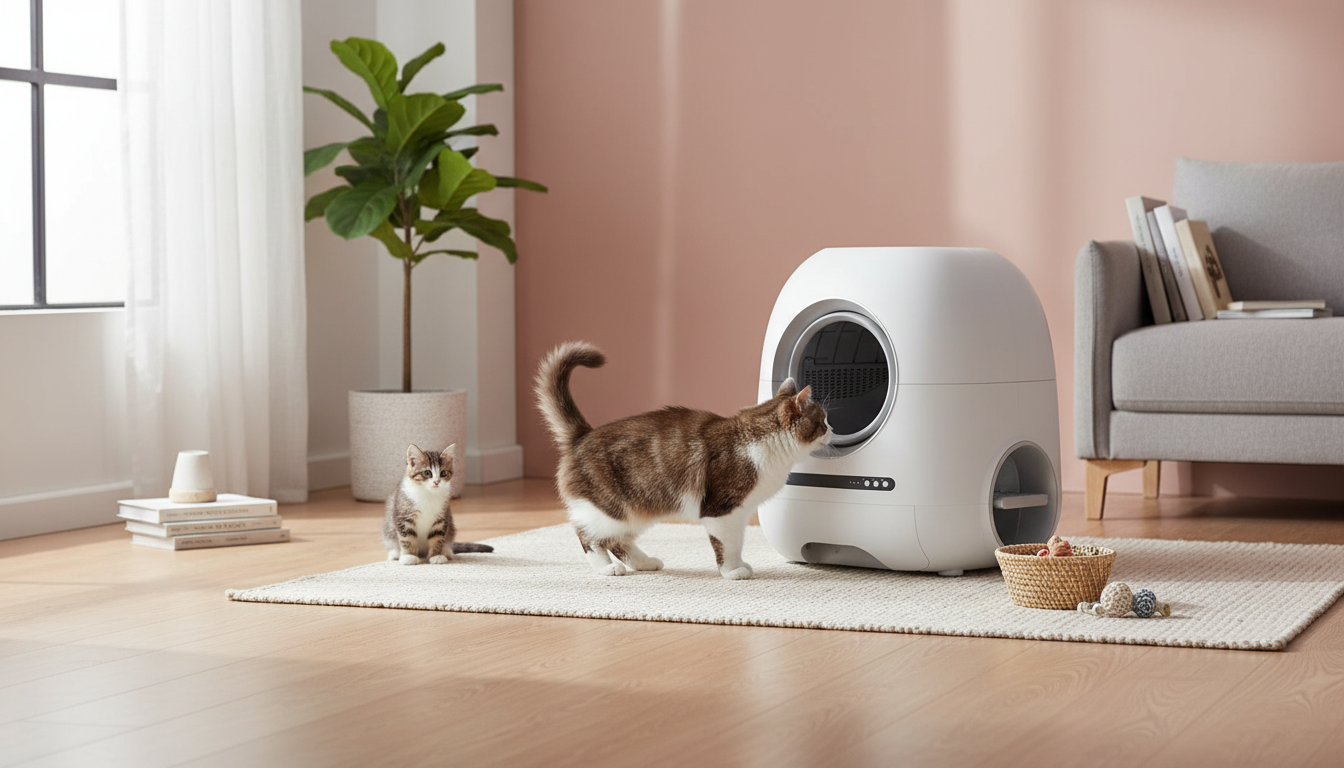
Smart Automatic Cat Litter Box: Cleaner Homes, Happier Cats
A smart automatic litter box can cut down daily scooping, keep odor more controlled, and make litter maintenance feel predictable—especially in busy households or smaller living spaces. Instead of waiting for someone to scoop “soon,” these systems remove waste after each visit and store it in a sealed compartment. The result is often a cleaner litter surface for your cat and less smell drifting through your home.
What makes a litter box “smart” and automatic
Automatic litter boxes combine mechanical cleaning with safety sensors. While designs vary, most systems work in a similar way: after your cat exits, a cleaning cycle separates clumps and waste, then returns clean litter back to the tray.
- Automatic cleaning cycle: Runs after use to remove clumps and solids, keeping the main litter area fresher.
- Sensors and safety logic: Detect entry/exit to prevent cycling while a cat is inside; some models add anti-pinch and tilt protection.
- Waste containment: Uses a sealed waste drawer or bag compartment to slow odor leakage between emptying.
- Optional app-style features: Depending on the model, you may get reminders, usage tracking, or error alerts.
Everyday benefits for cats and people
The biggest day-to-day difference is consistency. A box that cleans after each use reduces the “dirty box” moments that can lead to avoidance, especially in multi-cat homes. That cleaner surface can also mean fewer wet, saturated spots where litter sticks to paws.
- Less odor drift: Faster waste isolation can reduce ammonia smell building up throughout the day.
- Cleaner paws: Fresher litter and fewer damp patches can reduce tracking into other rooms.
- More consistent hygiene: A clean surface between visits helps prevent litter box standoffs between cats.
- Time savings: Maintenance shifts from frequent scooping to scheduled emptying and quick wipe-downs.
- Better monitoring: With a consistent routine, it’s easier to notice changes in clump size, stool quality, or frequency.
Manual vs. automatic: practical differences
| Category | Manual box | Smart automatic box |
|---|---|---|
| Daily routine | Scoop 1–2+ times/day | System cycles after use; empty waste drawer on a schedule |
| Odor control | Depends on scoop frequency and litter | Faster waste isolation can reduce lingering smell |
| Mess/track | More stirred, damp areas can spread | Cleaner surface between visits may reduce tracking |
| Multi-cat load | Often requires extra boxes and more scooping | Can handle higher traffic with consistent cycling (capacity varies) |
| Ongoing costs | Litter + occasional liners | Litter + possible liners/bags + occasional filters (model-dependent) |
Key features to prioritize before buying
Not all automatic boxes feel the same to a cat. Comfort, stability, and predictable movement matter just as much as “smart” features.
- Capacity and interior space: Make sure the chamber allows comfortable turning; larger cats need extra headroom and width.
- Waste drawer volume: Bigger drawers usually mean fewer emptying trips; confirm realistic day counts for your number of cats.
- Odor sealing: Gasketed drawers, tight lids, and optional carbon filters can help, but regular emptying is still essential.
- Litter compatibility: Confirm recommended litter types (often clumping formulas). The wrong litter can cause jams or poor separation.
- Noise level and cycle timing: Quieter motors and delayed cycles are easier on cautious or noise-sensitive cats.
- Safety logic: Reliable presence detection, cycle lockouts, and stable construction help prevent tipping or accidental cycling.
For additional guidance on litter box behavior and preventing house-soiling issues, see the AAFP Feline House-Soiling Guidelines and the ASPCA’s litter box resources.
Spotlight: 65L Smart Automatic Cat Litter Box
If your goal is less daily scooping with a more dependable routine, a higher-capacity unit can be a practical upgrade. The 65L Smart Automatic Cat Litter Box is built around a large 65L capacity, aimed at longer intervals between deep clean-outs while keeping the main litter area cleaner between visits.
- Large capacity: Designed to support longer stretches between full refreshes and to feel roomy for many adult cats.
- Automated separation and collection: Helps move waste into a collection area so the litter surface stays more inviting.
- Routine-friendly: Often fits households that want predictable maintenance rather than frequent scooping.
- Placement planning: Set it near a power outlet with enough clearance for safe cycling and easy drawer access.
Quick checklist for a good fit at home
| Consideration | What to verify |
|---|---|
| Cat size and mobility | Cat can enter/exit comfortably; senior cats may need a lower step or ramp |
| Home space | Stable floor, low-traffic corner, clearance for waste drawer removal |
| Cleaning rhythm | Comfortable emptying cadence based on number of cats and litter type |
| Noise sensitivity | If cat is skittish, choose delayed cycles and introduce gradually |
| Backup plan | Keep a basic box available during the transition period |
Setup and transition tips for a smooth adjustment
Cleaning and maintenance routine that keeps odor low
Common issues and quick fixes
Helpful add-ons for a cleaner routine
FAQ
Is an automatic litter box safe for cats?
Most modern automatic boxes are designed with presence detection and cycle lockouts so the unit won’t run while a cat is inside. Choose a model with reliable sensors, introduce it gradually, and keep a backup box available while your cat adjusts and you supervise early use.
How often does the waste drawer need to be emptied?
For one cat, many households start around every 2–4 days, then adjust based on odor, diet, and drawer size. Multi-cat homes typically need more frequent emptying, and odor control usually improves when you empty sooner rather than later.
What litter works best with automatic cleaning systems?
A strong clumping litter is usually the best match because it forms firm clumps that separate cleanly during the cycle. Follow the manufacturer’s compatibility guidance, avoid non-clumping litter, and keep dust low since excess dust can interfere with sensors over time.
Recommended for you


Was this article helpful?
Yes
No



Leave a comment