-
Shop
- Advanced Technologies
- AI Skills
- AI Skills Mastery 2026 Collection
- Bathroom
- Beauty
- Best-Sellers
- Bluetooth Speakers
- Car Accessories
- Car Buying & Ownership
- Car Electronics
- Chargers
- Confidence
- Dating & Social Skills
- Education & Learning
- Family & Parenting
- Fashion
- Accessories
- Alexander McQueen
- Bags
- Bags & Wallets
- Balenciaga
- Belts
- Blazers
- Blouses & Shirts
- Bottega Veneta
- Bottoms
- Brunello Cucinelli
- Burberry
- Chanel
- Chloé
- Dior
- Dolce & Gabbana
- Dresses
- Etro
- Fendi
- Gucci
- Hats & Hair Accessories
- Hoodies & Sweatshirts
- Jacquemus
- Jewelry
- Jil Sander
- Keychains
- Kiton
- Luggage
- Luggage Bags
- Miu Miu
- Off-White
- Outerwear
- Prada
- Rick Owens
- Saint Laurent
- Socks & Tights
- Sweaters & Cardigans
- The Row
- Tom Ford
- Tops & Shirts
- Valentino
- Valentino Garavani
- Versace
- Vivienne Westwood
- Watches
- Furniture
- Gadgets
- Game Controllers
- Headphones & Earbuds
- Health & Beauty
- Health & Wellness
- Home & Garden
- Home Decor
- Home Electronics
- Home Styling & Organization
- Keyboards & Mice
- Kids & Babies
- Kitchen Best-Sellers
- Lighting
- Luxury Brands Collection
- Microphones & Accessories
- Parenting & Child Development
- Patio, Lawn & Garden
- Personal Growth
- Personal Style & Fashion
- Pet Care
- Pet Lifestyle & Wellness
- Pet Supplies
- Pets
- Phone & Tablet Accessories
- Shoes
- Smart Home
- Smart Life with AI
- Sport & Outdoors
- Travel
- Travel & Adventure
- Wealth
- Wellness
Space-Saver Clothes Folding Checklist (Printable Download)
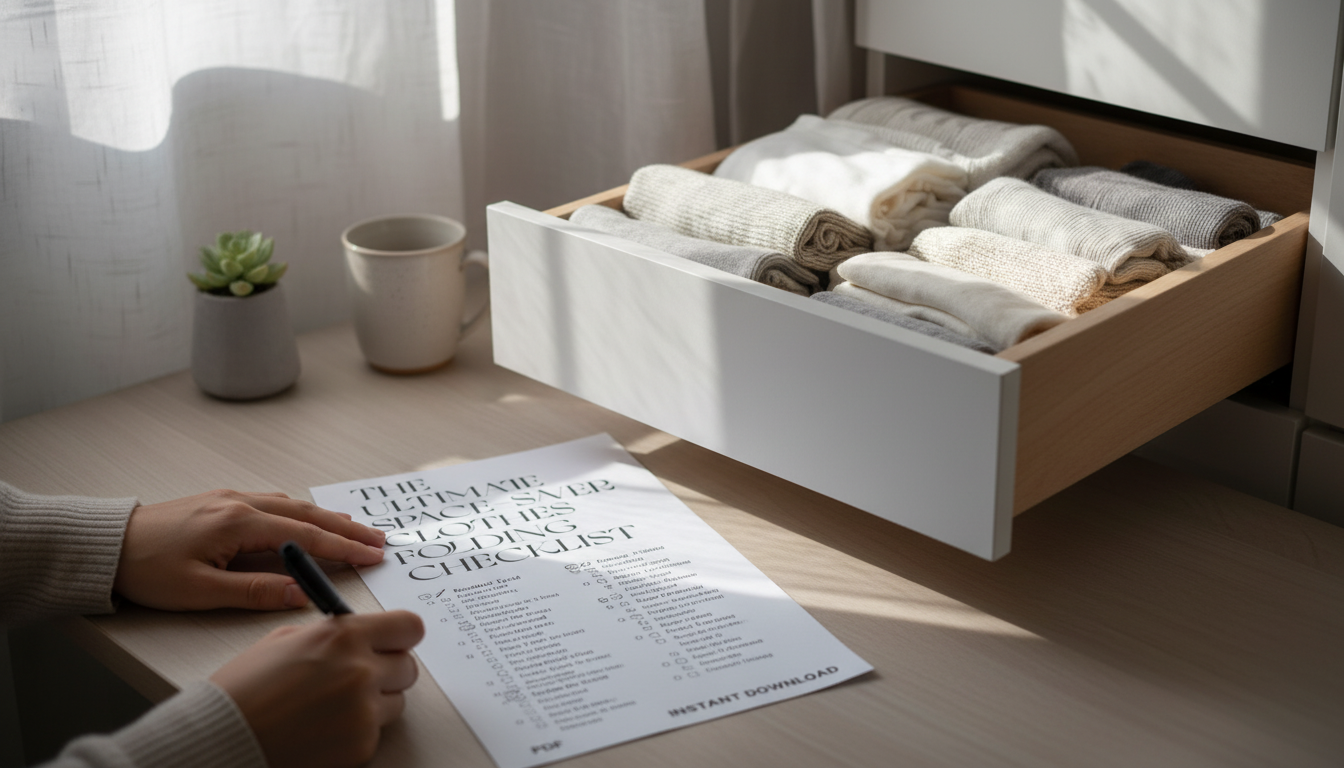
The Ultimate Space-Saver Clothes Folding Checklist (Printable Digital Download)
When every shirt is folded a different way, storage turns into a game of drawer Jenga: stacks slump, shelves slide, and suitcases “puff” back up the second you pull something out. A simple, repeatable folding routine fixes that—by standardizing the footprint of each clothing type so items stay compact, visible, and easy to grab at home or on the road.
If you want a consistent system you can follow on laundry day (and keep following when you’re tired), the Space-Saver Clothes Folding Checklist (Printable Digital Download) makes the process quick: fewer decisions, faster resets, and less wasted space.
What this checklist helps solve
- Overstuffed drawers that won’t close and piles that collapse when one item is removed
- Suitcases that look organized at departure but explode after the first outfit change
- Closet shelves that waste vertical space because stacks slump and slide
- The “too many methods” problem: inconsistent folding sizes that prevent neat stacking
- Faster laundry put-away by using one standard fold per clothing type
Before you fold: a 3-minute setup that saves more space
- Empty the drawer, shelf, or suitcase fully to reset the footprint and remove hidden clutter.
- Sort by category first (tops, bottoms, underwear, sleepwear, activewear) so folds stay consistent.
- Choose one storage style per space: vertical filing for drawers, tight stacks for shelves, compact bundles/rolls for travel cubes.
- Match the fold to the fabric: bulky knits need fewer layers; thin cotton benefits from tighter, flatter folds.
- Use a flat surface and smooth the garment (wrinkles = trapped air = lost space).
For a quick quality check before storing or packing, a full-length mirror helps you spot twisting seams or bunched hems that create “air pockets” in a fold. The 60″x16″ LED Dimming Full Length Mirror also makes it easier to plan outfits so you pack fewer “just-in-case” extras.
The space-saver folding checklist (by item)
- T-shirts & casual tops: Flatten, fold sleeves in to create a rectangle, then fold into thirds for a stable, stackable shape. Keep the same width every time.
- Long-sleeve tops: Fold sleeves across the back to reduce bulk at the sides, then fold into thirds. Keep cuffs inside the rectangle.
- Sweaters/knits: Avoid over-folding (it creates thick lumps). Fold in half once and then once more, or store upright if the drawer height allows.
- Jeans & thicker pants: Align seams, fold in half lengthwise, then fold into thirds. Keep the waistband on the outside of the final fold for stability.
- Lightweight pants/leggings: Fold in half lengthwise and then roll or fold into thirds. Aim for a compact cylinder/brick that stands upright.
- Shorts: Fold in half, then into thirds. Smooth pockets flat to reduce “puff.”
- Underwear: Fold into a small rectangle; store vertically in rows so every pair is visible at a glance.
- Socks: Avoid balling (adds bulk). Lay flat, fold in half, then tuck one cuff over the bundle to keep pairs together.
- Bras (structured): Stack nested cups to prevent dents; place along the back of a drawer or in a travel pouch.
- Sleepwear & loungewear: Fold loosely to avoid bulky creases; keep sets together to reduce morning rummaging.
Quick fold choices for maximum space and easy retrieval
| Item | Best storage style | Fold goal | Common mistake to avoid |
|---|---|---|---|
| T-shirts | Vertical filing (drawer) or tight stack (shelf) | Uniform rectangles that stand upright | Random widths that topple stacks |
| Jeans | Tight stack or thirds in a drawer | Compact “brick” with flat seams | Over-rolling that creates thick lumps |
| Leggings | Vertical filing or roll in travel cubes | Slim bundle that doesn’t unfold | Loose roll that expands when handled |
| Underwear | Compartment rows | Small rectangles, easy to count | Stuffing into corners (creates dead space) |
| Socks | Row storage | Pairs secured without bulking | Balled socks that waste volume |
Drawer organization that keeps folds from falling apart
- Use vertical filing when possible: Items stand like folders so one removal doesn’t disturb the rest.
- Assign zones: Everyday basics in the front, seasonal/backup items in the back.
- Limit stack height: Stop stacking once the pile leans—shorter stacks stay stable and visible.
- Add simple dividers: Small boxes or dividers for underwear/socks prevent drift and mixing.
- Maintain a “one-touch rule”: Each item should lift out without pulling others with it.
Closet shelf organization: make stacks look neat and stay neat
Travel packing: folding for maximum space without turning clothes into a mess
Using the printable digital download for consistent results
For a visual reference on upright folding, the Marie Kondo Method: How to Fold Clothes is a helpful example of how consistent rectangles improve visibility. And for laundry hygiene basics—especially for travel items that get re-worn—see the CDC guidance on keeping clothes and linens clean.
FAQ
Is rolling or folding better for saving space?
Rolling is great for thin, casual items—especially inside travel cubes—because it reduces air gaps. Structured pieces and denim often pack flatter with a consistent fold into thirds. Stick to one method per section (one cube, one drawer zone, one shelf stack) to prevent uneven piles.
How can drawers stay organized after pulling out one shirt?
Use vertical filing with uniform fold sizes so each item lifts out like a folder instead of unstacking the pile. Keep stacks short, add dividers for small items, and aim for one-touch retrieval so neighboring folds aren’t disturbed.
What’s the fastest way to fold a full load of laundry without creating clutter?
Sort by category first, then fold each category using one standard method before moving to the next. Put items away immediately into pre-set zones to avoid “clean-clothes piles,” and use a checklist to eliminate decision fatigue mid-fold.
Recommended for you
Was this article helpful?
Yes
No


Leave a comment